
How to import medical supplies wholesale from Mexico: HS codes, COFEPRIS, FDA, CE & USMCA
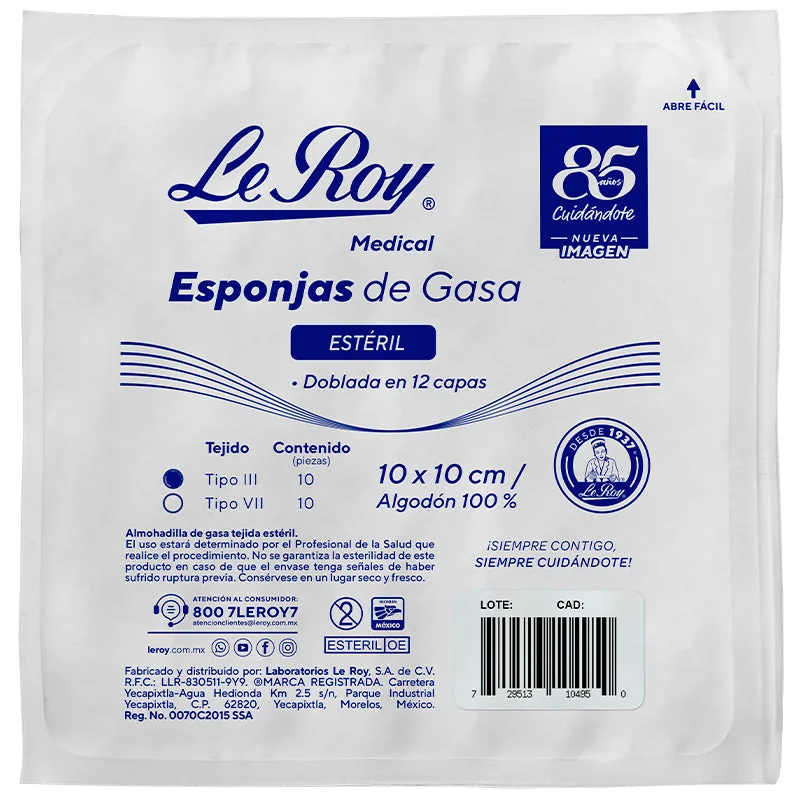
Mexico is a leading, tariff-efficient source of medical disposables for the Americas, and increasingly for Europe and the Middle East. For a wholesale importer, four things determine a smooth programme: classification, certification, market pathway and logistics.
1. HS codes for medical supplies
Wound care (gauze, bandages, dressings, wadding) classifies under HS heading 3005. Orthopedic supports and appliances fall under 9021. Adhesive dressings sit in 3005.10, gauze in 3005.90, gloves under 4015/3926, face masks under 6307/4818. Confirm each line's national tariff code with your broker — duty and inspection follow the code.
2. Certification stack
- ISO 13485 & ISO 9001 — Le Roy was the first Mexican wound-care manufacturer to hold both.
- COFEPRIS GMP — Mexican health-authority Good Manufacturing Practices and product health registrations.
- Certificate of Free Sale — frequently required for registration and tenders abroad.
- Per-lot certificate of analysis — for incoming-goods control.
3. Destination-market pathway
United States: most wound care and supports are Class I devices; the importer registers and the manufacturer is listed (Le Roy also serves the US via its subsidiary Ambra Le Roy). European Union: CE marking under the MDR with a technical file and an EU authorised representative. Latin America: national registries (INVIMA, ANMAT, DIGEMID, ANVISA, COFEPRIS-equivalents). Gulf/Middle East: ISO 13485 plus a Certificate of Free Sale and country registration (e.g. SFDA in Saudi Arabia); orthopedic supports and casting are strong tender categories here.
4. The USMCA advantage
Mexican-origin product can qualify as USMCA-originating for preferential (often zero) duty into the US and Canada — a structural edge over Asian supply now facing higher tariffs. Ask for a USMCA certification of origin.
5. Logistics & tenders
Most lines are light and high-cube and ship economically in mixed containers; alcohol is a dangerous good requiring compliant packing. Mexican ports and land borders give short transit to the Americas. Quotes are issued EXW, FOB, CFR or CIF under Incoterms 2020, with full tender documentation on request.
Frequently asked questions
Does Le Roy export directly or through traders?
Directly. This site is Le Roy's wholesale-export channel, with factory-direct pricing and the manufacturer's own documentation; the US is also served via our subsidiary Ambra Le Roy.
Which markets are easiest to start in?
The Americas (USMCA duty advantage, short transit) and the Gulf (strong demand for supports and casting, ISO 13485 + Certificate of Free Sale pathway) are typically the fastest to open.
Can I mix lines in one container?
Yes — wound care, bandages, supports and PPE consolidate in a mixed wholesale container, ideal for first orders.
Further reading
- Elastic and compression bandages: Elastomedic, Premium and tubular net explained
- Orthopedic supports wholesale guide: sizing, categories and the Gulf & LatAm opportunity
- Plaster of Paris vs synthetic casting bandages: which to import, and when
- Advanced wound dressings explained: alginate, collagen, film, antimicrobial and tulle
- Why source medical supplies wholesale from Mexico in 2026: USMCA, heritage and resilience
Planning a wholesale import programme?
Get a factory-direct quote — specifications, certification package and USMCA origin in one offer.